
Американские инвесторы никогда не были настолько сильно вовлечены в фондовый рынок.
Медианная стоимость активов домохозяйств в акциях, ETF и пенсионных счетах 401(k)/IRA достигла около $350 тыс. — нового исторического максимума.
За последние два года показатель вырос более чем в два раза, а только с начала 2026 года увеличился примерно на $150 тыс.
Это показывает одну важную тенденцию:
рост рынка акций стал одним из главных источников роста благосостояния американцев.
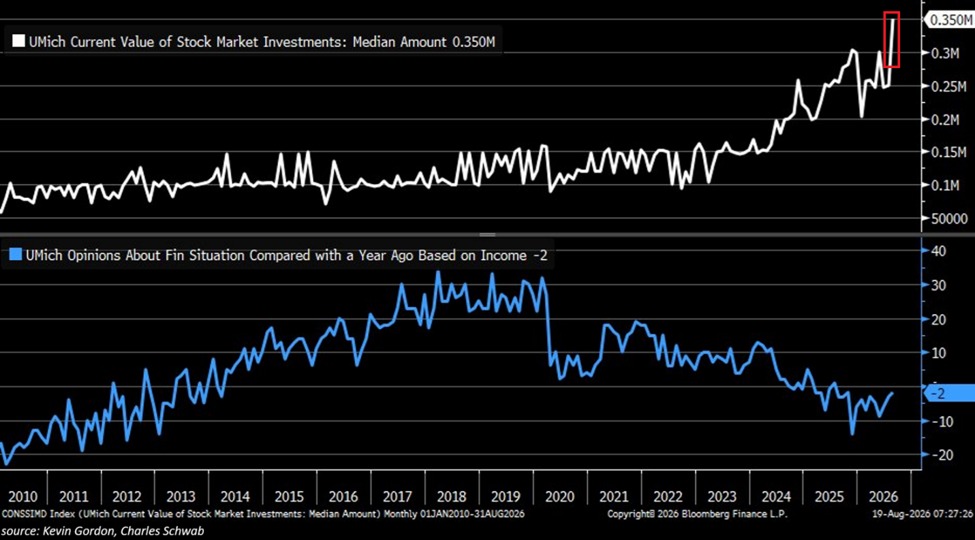
Медианная стоимость инвестиций американских домохозяйств и оценка личного финансового положения. Рост фондового рынка значительно увеличил объем активов населения. Источник: University of Michigan, Bloomberg.
Почему это важно для экономики
Когда фондовый рынок растет, владельцы активов чувствуют себя богаче.
Это влияет на поведение потребителей:
люди больше тратят;
растет уверенность в будущем;
увеличивается спрос на товары и услуги.
Так работает эффект богатства.
Но у этой ситуации есть и обратная сторона.
Чем опасна высокая концентрация в акциях
Чем больше благосостояние населения зависит от фондового рынка, тем сильнее экономика становится чувствительной к коррекции.
Если акции резко падают, последствия могут быть заметными:
снижается потребительская уверенность;
люди сокращают расходы;
уменьшается инвестиционная активность.
Особенно это важно сейчас, когда значительная часть роста индексов была обеспечена крупными технологическими компаниями и AI-сектором.
Рынок растет, но распределение неравномерное
Главный нюанс заключается в том, что рост акций приносит выгоду прежде всего владельцам капитала.
Домохозяйства с большими портфелями получают основной эффект от роста рынка.
А люди без значительных инвестиций меньше ощущают улучшение финансового положения.
Это создает разрыв между теми, кто участвует в росте активов, и теми, кто зависит преимущественно от заработной платы.
Что может изменить ситуацию
Пока рынок продолжает расти, высокий уровень вложений населения выглядит преимуществом.
Но при резкой смене настроений ситуация может измениться.
Основные риски:
снижение прибыли компаний;
рост доходностей облигаций;
изменение ожиданий по ФРС;
сильная коррекция технологического сектора.
Главный вывод
Американские домохозяйства сейчас имеют рекордный объем вложений в акции.
Это поддерживает потребление и уверенность населения, но одновременно создает новую уязвимость.
Чем больше людей зависят от роста фондового рынка, тем важнее становится стабильность самих рынков.
Главный вопрос:
станет ли рекордное участие населения продолжением бычьего цикла или источником дополнительного риска при следующей коррекции?