

News
Brazil emerged as a trading superpower. Why Real may be undervalued
Brazil has sharply strengthened its foreign trade position: in January-August 2026, the trade surplus reached $55.3 billion. Why is this structural shift important for the Brazilian Real and why could the political premium hide the fundamental picture for a long time?
Read More
News
Indian startups are entering the era of the “big restart”: AI, profit, and new valuation rules
The Indian startup industry is moving from a race for growth to a more rigid model: AI, profitability, capital and sustainability are becoming more important than the fact of rapid scaling.
Read More
News
AI is becoming mainstream, but few have any money left: 99.5% of spending is concentrated in 10% of companies
More and more American companies are starting to pay for AI infrastructure, but the bulk of the money is still spent by an extremely small group of businesses. The top 10% of companies form 99.5% of the costs for launching and processing requests for AI models.
Read More
News
Gasoline grew by 24.6%, but in a week it almost did not rise in price: how is this possible?
Gasoline in Russia turned out to be 24.6% more expensive than a year ago, but over the week the average price increased by only one penny. We understand why both indicators are simultaneously correct and what they say about inflation.
Read More
News
CMBS Office Delinquencies Reach 12%: Why U.S. Commercial Real Estate Stress Is Intensifying
The share of overdue office loans in the US CMBS rose to 12% in August — almost returning to the all-time high of January. Why does the office segment remain the main source of tension in the commercial real estate market?
Read More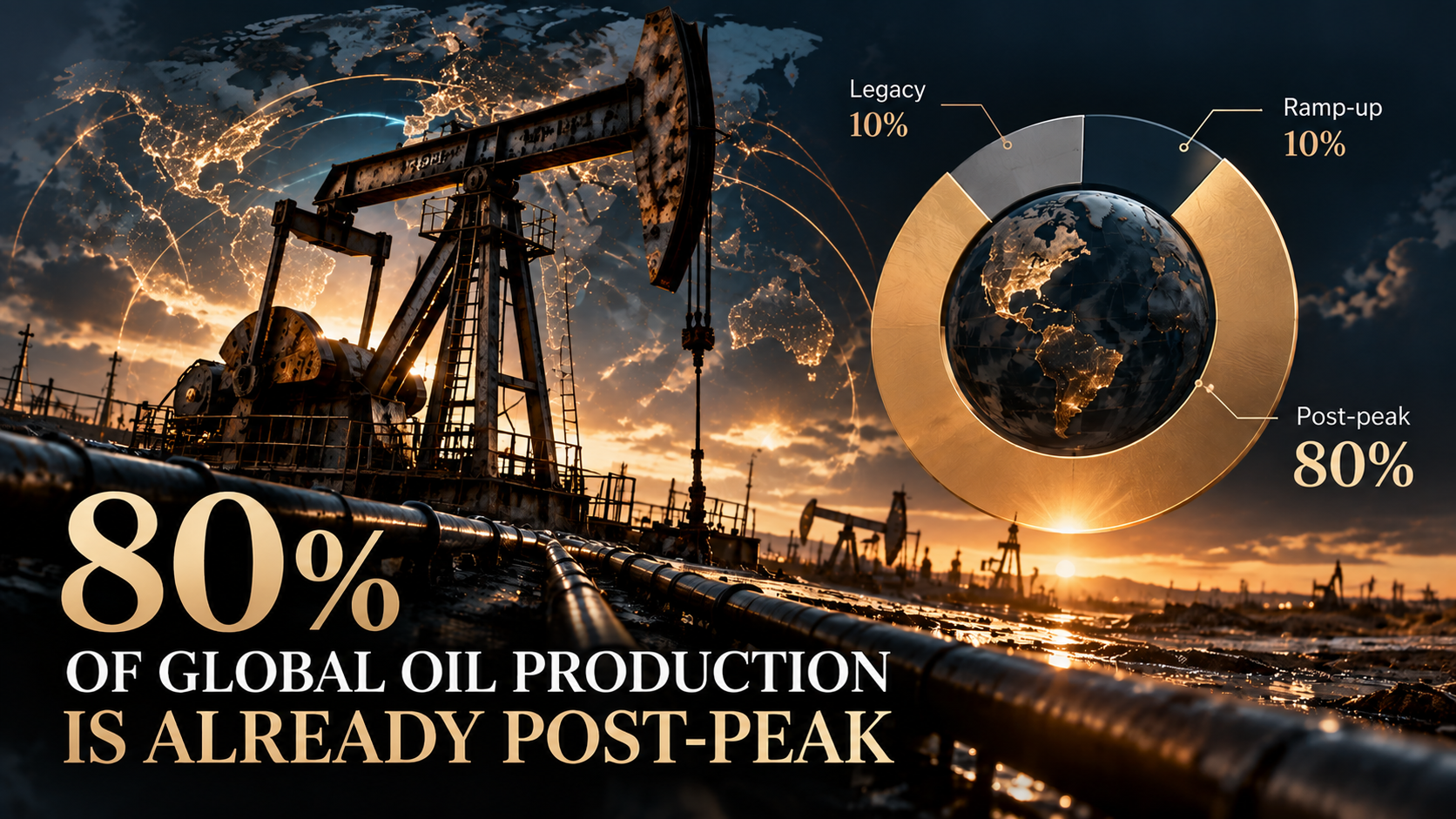
News
80% of world oil production is after the peak. Why is this important
Most of the world's oil production is already past peak production. Against the backdrop of the war in the Middle East and the decline in oil investment, this changes the main question of the market: not how much oil exists, but how much new production will have time to replace the natural decline of old fields.
Read More
News
Sulfur Crisis 2026: Why Sulfur Deficiency Threatens Fertilizers and Critical Metals
Sulfur has been an unnoticed byproduct of the oil and gas industry for decades. Now disruptions through Hormuz, Russian and Chinese export restrictions and rising demand are turning it into a critical raw material for fertilizer, copper, nickel and other industries.
Read More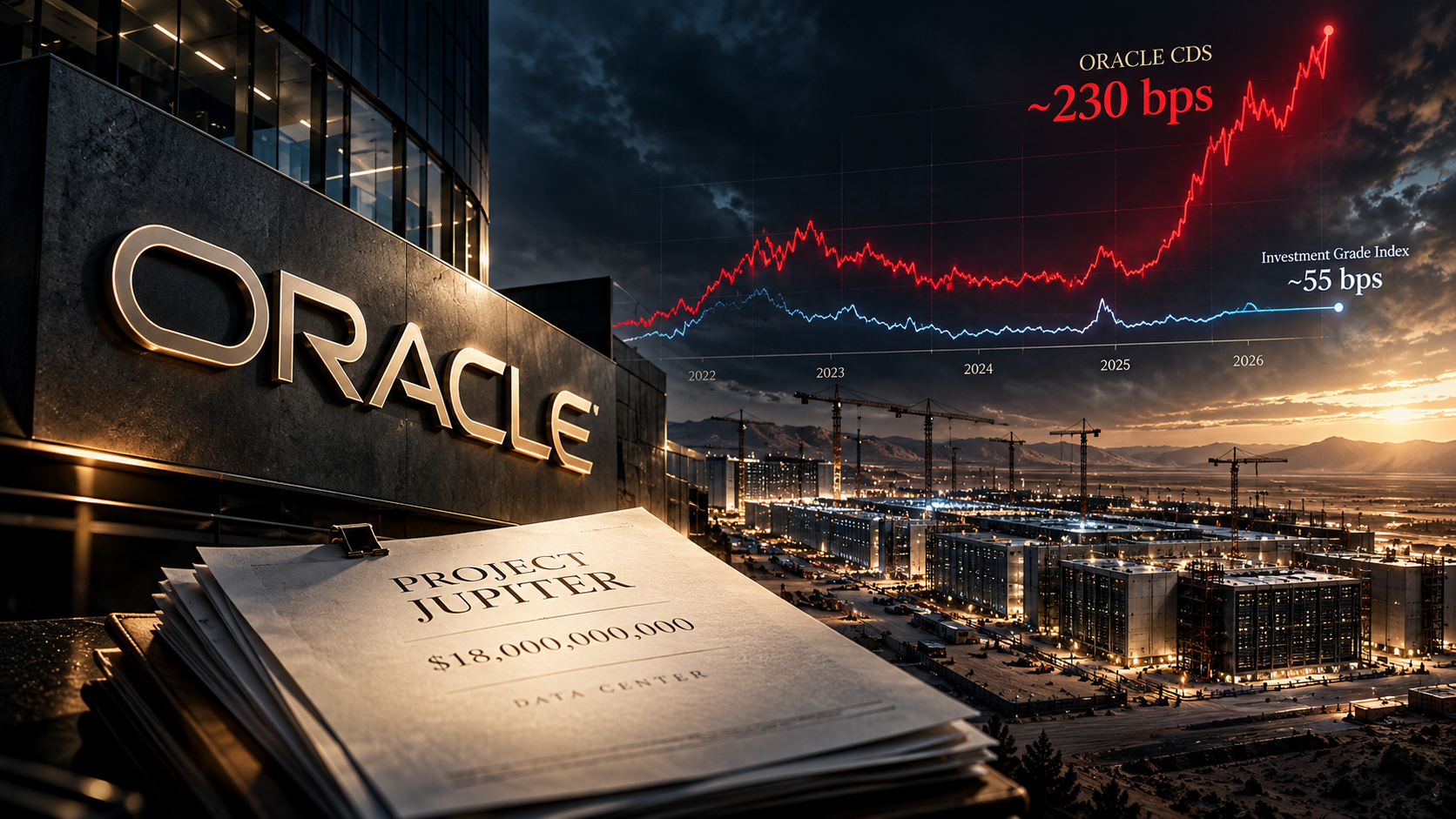
News
Oracle: credit risk has risen sharply amid problems with Project Jupiter
Oracle's five-year CDs expanded dramatically and significantly outperformed the broad investment credit index. At the same time, $18 billion of Project Jupiter debt financing is trading below par, and infrastructure and regulatory risks are growing around the company's largest AI data center.
Read More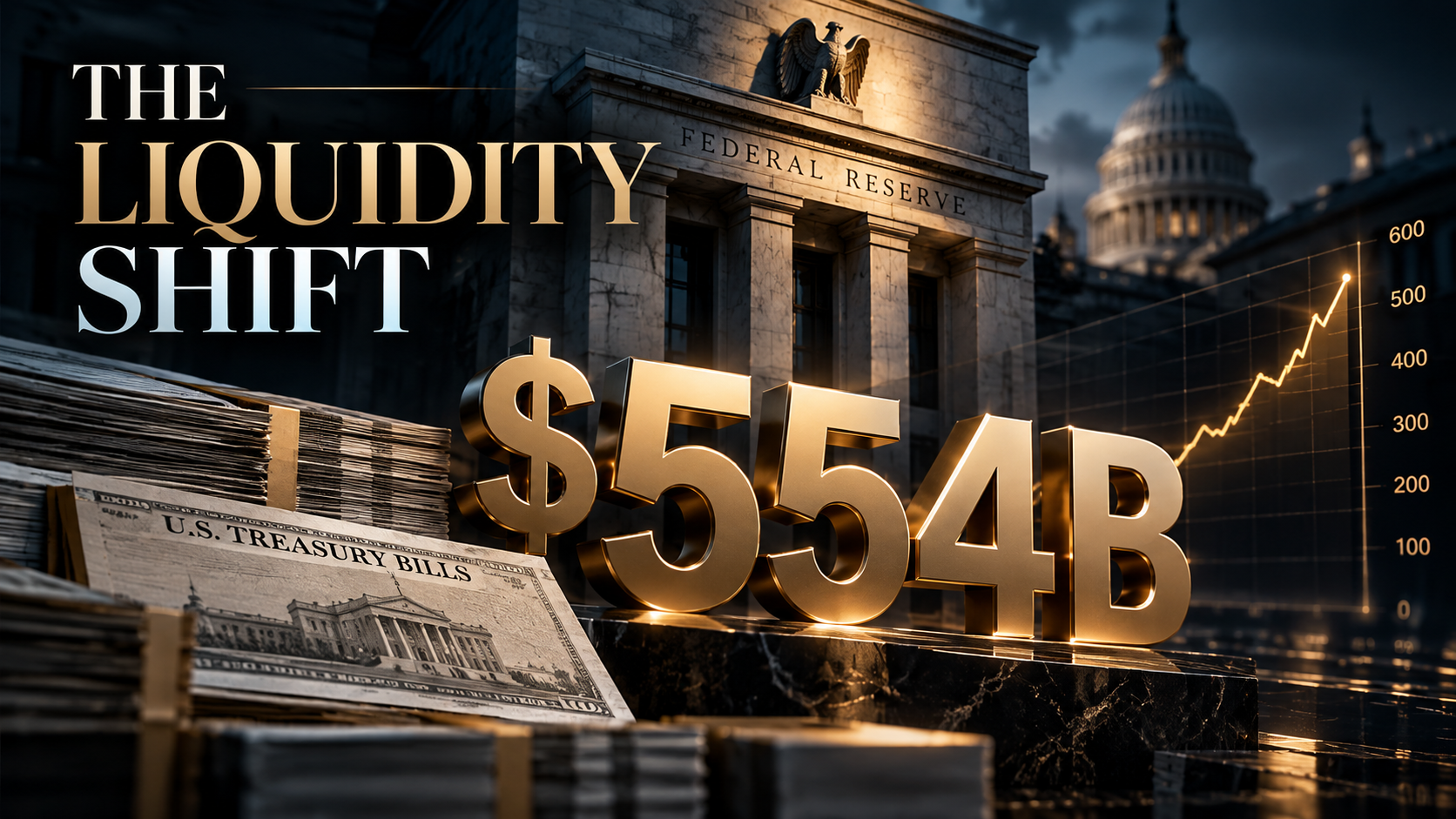
News
Fed Increases Treasury Bills to $554 Billion: Why the Balance Rises After a Rate Increase
The Federal Reserve increased the volume of Treasury Bills on the balance sheet to about $554 billion. The growth occurs against the backdrop of a new rate hike and simultaneously with large-scale Treasury operations in the public debt market. What is behind this movement and why shouldn't it be automatically called the new QE?
Read More
News
Nvidia and SpaceX ramp up debt: why the credit market is getting nervous about the AI boom
Nvidia and SpaceX have become part of a huge investment cycle around artificial intelligence, but the credit market is starting to look at the story differently. The cost of protecting both companies from credit risk has increased, and the cost of AI infrastructure is estimated at hundreds of billions of dollars. We understand why CDs can tell more about the risks of an AI boom than the stock price.
Read More
News
MOVE Index soars 21%: why the bond market can warn of an S&P 500 correction
The S&P 500 is still close to all-time highs, but the US bond market has changed its behavior dramatically. On September 23, the ICE BofA MOVE Index rose 21.5% to 95.45, showing a sharp increase in the expected volatility of the Treasury. Why can bond movement be more important than stock market calm and is the S&P 500 really facing a new correction?
Read More
News
Chinese AI is under attack: why Z.AI, MiniMax and Alibaba are falling and what happens to DeepSeek
Chinese AI companies came under renewed pressure after reports of an investigation by DeepSeek and Moonshot AI over the possible transfer of user data to Anthropic models. Shares of Z.AI, MiniMax, Alibaba, Xiaomi and Tencent declined. We understand what happened, why the market reacted so sharply and whether this can change the AI race between China and the United States.
Read More
News
The S&P 500 has become a technology market: why 51% of capitalization is now tied to Tech and AI
The US stock market is becoming increasingly dependent on technology companies. The broad technology group already accounts for about 51% of the S&P 500's capitalization. We understand why the market turned out to be so concentrated, who is driving this growth and what can change the situation.
Read More
News
Hedge funds bought up $1.7 trillion in Treasuries: why the US government debt market is becoming more vulnerable
Hedge funds have become one of the largest players in the US Treasury market. Their positions rose sharply against the backdrop of the popularity of basis trade and the use of leverage. We understand where this demand came from, why the Fed is monitoring the leverage of hedge funds and what will happen to the markets if this strategy begins to unfold en masse.
Read More
News
The diesel market is on the brink: why fuel shortages could exacerbate inflation around the world
The global diesel market has faced several supply shocks at once. Disruptions in US refineries, attacks on Russian infrastructure, reduced supplies from Saudi Arabia and possible restrictions on US exports create a rare situation: oil on the market may not be enough exactly where it is needed to produce fuel.We understand why diesel is becoming the main inflation risk in the autumn of 2026.
Read More
News
The yen is under pressure: what will the Bank of Japan decide and why USDJPY may again approach 160
The Japanese yen was again under pressure after the strengthening of the dollar. The decision of the Bank of Japan on September 18, 2026 may determine the further direction of USD/JPY. We analyze the impact of the Fed's policy, the cost of oil, the risk of currency intervention and key levels for traders.
Read More
News
Global Bond Sale: Why Yields Are Rising and What It Means for Markets
Global Bond Sale: Why Yields Are Rising and What It Means for Markets
Read More
News
Copper hits all-time highs: why growth is slowing and what's next
The price of copper updated the historical maximum, but after a rapid rally, the market began to cool. We analyze the impact of China, demand from AI and energy infrastructure, as well as the reasons why copper shortages can preserve the long-term potential of the market.
Read More
News
The U.S. Mortgage Market Under Pressure: Why Rising Rates Are Threatening Housing Demand
Mortgage applications in the US are declining, and the cost of 30-year loans is approaching 7%. We analyze how the growth in bond yields affects the housing market, consumer demand and the outlook for the economy.
Read More
News
Crypto CLARITY Act: Why a New US Bill Could Change the Cryptocurrency Market
The US Senate presented the final version of the Crypto CLARITY Act before a key vote on September 15. The bill proposes to define the rules for the cryptocurrency market, distribute powers between the SEC and the CFTC and establish new requirements for industry participants.We understand what the CLARITY Act is, why 60 votes are needed to promote it, and how the possible adoption of the law may affect Bitcoin, exchanges, DeFi and investment interest in digital assets.
Read More
News
The market has sharply revised expectations for ECB rates: why money is becoming more expensive around the world
Traders are laying three more ECB rate hikes by the end of 2027. European bond yields are rising, and pressure is spreading to the US and Japan. We understand why the era of cheap money can be replaced by a global rise in the cost of capital.
Read More
News
The UK's energy sector is becoming increasingly dependent on imports
Natural gas production in the UK continues to decline, while domestic demand is declining much more slowly. As a result, the country is increasingly dependent on energy imports, and the gap between domestic production and consumption is widening.
Read More
News
CHINA SHOWED THE BEST EARNINGS GROWTH IN FIVE YEARS — BUT STOCKS ARE FALLING
The profit of Chinese companies trading in the mainland market in the second quarter increased by 25.7% year-on-year — the fastest pace in almost five years. The main driver was the AI sector, but the stock market reacted with a sell-off. Investors are increasingly questioning how quickly rising spending on artificial intelligence is translating into profits.
Read More
News
US HOMEBUYERS ARE INCREASINGLY SABOTAGING TRANSACTIONS
In July, the share of failed housing transactions in the United States reached a maximum in almost three years. High prices and mortgage rates limit demand, and a surplus of sellers gives buyers more and more opportunities to abandon the transaction and bargain.
Read More
News
INVESTORS ARE SWITCHING TO CHINA: AI TRADE HAS BECOME TOO OVERLOADED
Investors are increasingly betting on Chinese stocks through derivatives, while the AI trade in South Korea and Japan is becoming too crowded. CSI 1000 remains well below its May peak, and the cost of option strategies has returned to annual averages.
Read More
News
BESSENT PUTS PRESSURE ON JAPAN: WHY THE RATE HIKE COULD HIT THE STATE DEPARTMENT
The US is increasing pressure on Japan due to a weak yen and persistent inflation, urging the Bank of Japan to take more decisive action. But the Japanese regulator faces a difficult choice: fight inflation with higher rates or take into account the huge public debt and risks to the financial system.
Read More
News
SEPTEMBER IS A HISTORICALLY WEAK MONTH FOR THE S&P 500
Historical statistics show that September is the weakest month for the S&P 500. On average, the index declined more often than it rose this month, and the second half of September was particularly weak. Given the current market uncertainty, the seasonal factor becomes an additional risk for US stocks.
Read More
News
FED MAY RAISE INTEREST RATE IN SEPTEMBER
The market is sharply revising expectations for US monetary policy after a strong report on the labor market. The probability of a Fed rate hike in September rose to 53%, which increases pressure on gold and stocks and supports the dollar.
Read More
News
US PRODUCTION LOOKS STRONG, BUT THERE IS A NUANCE
The US manufacturing sector showed one of the strongest signals in recent years, but in parallel, the service business sharply worsened estimates of current activity. This gap makes the picture of the American economy much less clear.
Read More
News
AI HOLDS THE ENTIRE US CONSTRUCTION BOOM
American construction is increasingly dependent on one sector. While housing, offices and other projects are weakening, data centers are showing record growth against the backdrop of an AI boom.
Read More
News
AI IS NOT DESTROYING JOBS: IT IS RE-EDUCATING EMPLOYEES
New data from the Federal Reserve Bank of New York shows an unexpected picture: companies are more likely to retrain employees to work with AI than to reduce them. For the Fed, this may be much more important than the hype around mass automation itself.
Read More
News
INFLATION ACCELERATED TO 2.9% IN GERMANY: WHAT IT MEANS FOR THE ECB
Inflation in Germany has accelerated again, but the pattern of price increases points primarily to an energy shock. Now the markets are waiting for the ECB's decision on September 10.
Read More
News
September is the worst month for the S&P 500: the market enters the risk zone
Historically, September is the weakest month for the S&P 500. Since 1928, the index has completed its decline in 55% of cases, and the average return was about −1.1%. In 2026, the seasonal factor coincides with an increase in bond yields and uncertainty around Fed policy.
Read More
News
China has become a “swing buyer” of oil: Beijing decides where the price will go
China has accumulated a huge stock of oil and got the opportunity to choose the moment of return to the world market. While Beijing reduces imports and spends accumulated reserves, this limits the growth of prices. But the recovery in procurement can quickly create a new supply shortage and become a strong driver for Brent and WTI.
Read More
News
Warsh turns the Fed's expectations upside down: the September rate is once again in question
Kevin Warsh's performance at Jackson Hole dramatically changed market expectations. Against the backdrop of 3.7% PCE inflation, the Fed chairman made it clear that the regulator is ready to continue tightening if inflation does not return to the 2% target quickly enough. The probability of a rate hike in September rose to about 60%.
Read More
News
Raw materials go beyond oil: where UBS sees new opportunities
UBS believes that the commodity market has more to offer investors than the oil sector. Copper receives support from AI infrastructure and electrification, gold from central banks and reserve diversification, and agricultural products remain sensitive to weather risks.
Read More
News
Oil loses geopolitical premium: Strait of Hormuz returns market optimism
Oil fell sharply after signals of a possible resumption of navigation through the Strait of Hormuz. Negotiations between Iran and Oman on a temporary corridor and demining reduce the risk of supply disruptions, forcing the market to gradually remove the geopolitical premium from quotations.
Read More
News
The US trade deficit rose sharply: a new blow to GDP
The U.S. goods trade deficit jumped to $118.8 billion in July, the highest since March 2025. Imports rose sharply and exports declined. On the one hand, this may reduce the GDP growth rate in the third quarter, on the other hand, the structure of imports shows the continuing investment demand for technologies and equipment.
Read More
News
Anthropic sent staff home due to possible security strike
Anthropic temporarily relocated its San Francisco office staff to remote work after warning a contractor about a possible security strike. At the same time, the trade union said that no strike had been declared. History shows how physical security is becoming a separate issue for the rapidly growing AI industry.
Read More
News
The US housing market froze: fewer buyers than ever
The American real estate market is facing a rare situation: the number of homebuyers has fallen to a historic low, and sellers are beginning to significantly exceed demand. High mortgage rates and unavailability of housing force buyers to take a wait-and-see attitude, increasing pressure on prices.
Read More
News
US Households Hold Record Stock Volume: New Market Risk
The median value of investments by American households reached a record $350,000. Stocks, funds and retirement accounts have become the main source of wealth growth, but the high concentration of capital in the market increases the sensitivity of the economy to a possible correction.
Read More
News
U.S. Small Business Signals Recovery: Hiring Returns
US small companies have unexpectedly stepped up their hiring plans. In July, the NFIB showed the largest monthly growth in the history of observations, which may be an early signal of an improvement in the labor market in the coming months.
Read More
News
US private credit under pressure: first cracks in $2 trillion market
The US private lending market is facing an increase in problem loans. The share of overdue loans from the largest BDCs has reached its maximum since 2017, and high rates are beginning to put more pressure on borrowers. Why private credit is becoming one of the main risk areas for the financial system.
Read More